
Perfecting your powerlifting squat form requires understanding both the technical mechanics and developing proper muscle engagement patterns. The squat serves as a foundational movement in powerlifting that not only builds lower body strength but also develops core stability, balance, and full-body coordination when performed correctly.
Key Takeaways
- Proper foot positioning and stance width create a stable foundation for heavy squats
- Maintaining neutral spine alignment throughout the movement prevents injuries and optimizes force transfer
- Consistent depth training ensures you reach competition standards while maximizing muscle development
- Strategic breathing techniques increase intra-abdominal pressure for better core stability
- Regular form assessment using video analysis helps identify and correct technical flaws
Understanding the Fundamentals of Powerlifting Squat Technique
The powerlifting squat differs significantly from bodybuilding or CrossFit variations. It’s designed specifically to move maximum weight while meeting competition standards. Before loading the bar with heavy weights, I recommend mastering the basic movement pattern with just your body weight or an empty bar.
Pro Tip: Equipment Matters
The quality of your equipment dramatically affects your workout results. See our equipment recommendations →
Start with your feet shoulder-width apart or slightly wider, toes pointed outward at approximately 15-30 degrees. This stance creates a stable foundation that allows for proper hip opening during descent. Your weight should be distributed evenly across your entire foot, with emphasis on pushing through your midfoot rather than shifting to your toes or heels.
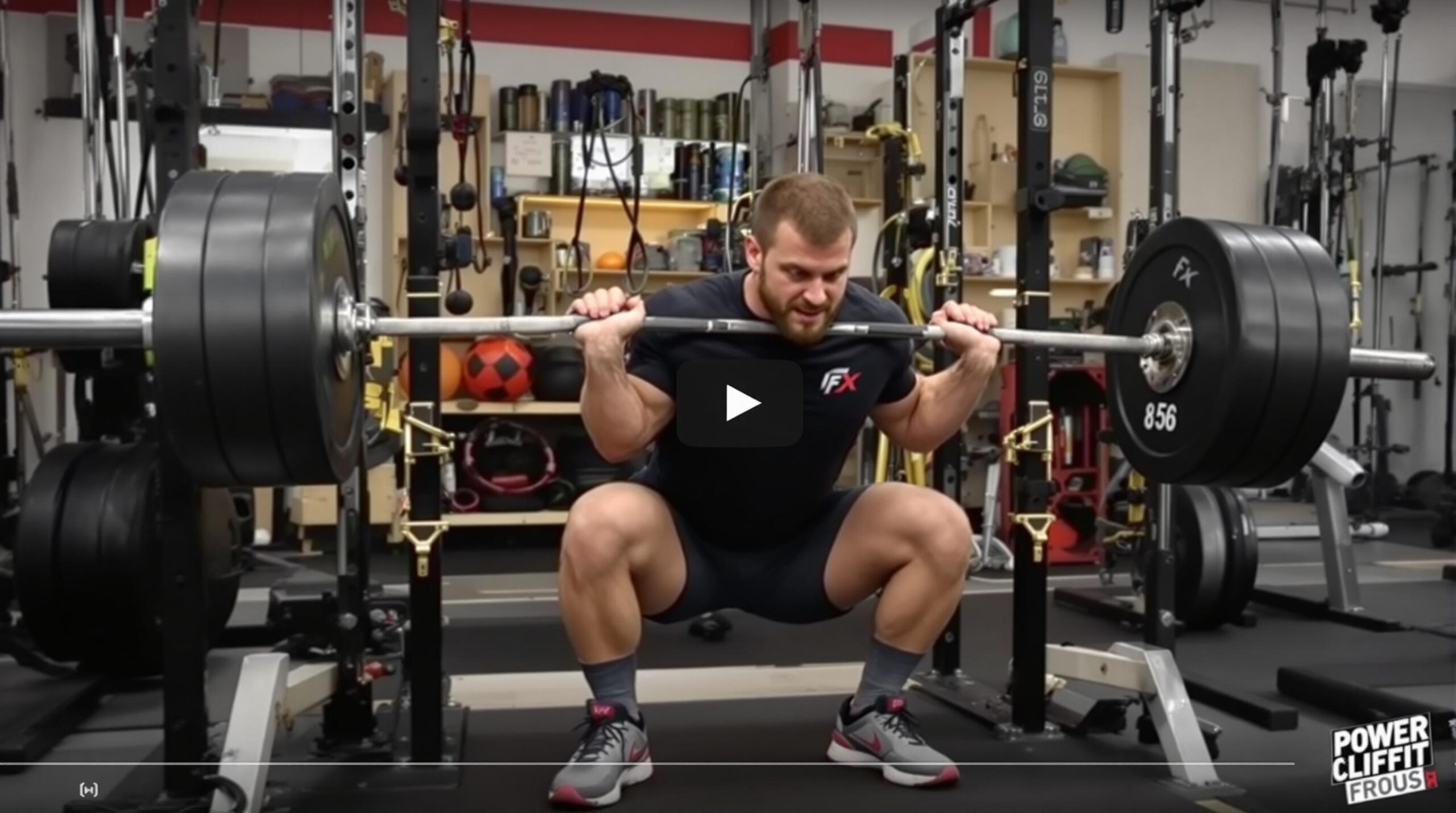
The bar position for a powerlifting squat typically sits lower on the upper back compared to other squat variations. This low-bar position shortens the moment arm between the weight and your hips, allowing for greater loads to be lifted. Your hands should grip the bar with a width that feels comfortable while keeping your elbows pointed downward rather than flared back.
Proper Setup and Execution for Maximum Strength
The setup begins before you even unrack the bar. Position yourself under the bar with your feet directly underneath your shoulders. Create tension in your upper back by pulling your shoulder blades together and down. This rigid upper back creates a stable shelf for the bar and protects your spine.
When unracking, stand up with the weight by straightening your legs, not by leaning forward. Take 2-3 small steps back – just enough to clear the rack but not so many that you waste energy. Set your feet in your squat stance and take a deep breath into your belly, bracing your core as if preparing for a punch.
The descent should be controlled rather than dropping quickly. Initiate the movement by breaking at the hips and knees simultaneously, keeping your chest up and maintaining the natural arch in your lower back. As you descend, push your knees outward in line with your toes to create space for your torso.
For competition standards, you’ll need to reach a depth where the crease of your hip drops below the top of your knee. I suggest training slightly below this minimum requirement to ensure you always hit depth when it matters. At the bottom position, drive through your midfoot, keep your chest up, and push your hips forward to return to the starting position.
Common Mistakes and How to Fix Them
Even experienced lifters can develop technical flaws that limit progress or increase injury risk. Here are the most common powerlifting squat form issues and their solutions:
- Knees caving inward (valgus collapse): This weakens your position and places stress on the knee joint. Fix by consciously pushing your knees out during the squat and strengthening your hip abductors with band exercises.
- Losing back tightness: A rounded upper or lower back compromises power and safety. Fix by improving your bracing technique and potentially using a slightly wider grip on the bar.
- Rising hips faster than shoulders (good morning squat): This shifts stress to your lower back. Fix by strengthening your quadriceps and focusing on keeping your chest up throughout the movement.
- Heels rising: This indicates poor ankle mobility or improper weight distribution. Fix by working on ankle flexibility or using proper lifting shoes with a raised heel.
- Shallow depth: Not reaching proper depth limits muscle development and won’t count in competition. Fix by practicing with lighter weights and potentially using box squats as a depth gauge.
Breathing and Bracing for Optimal Performance
Proper breathing and bracing techniques can significantly increase the weight you can lift safely. Before beginning your descent, take a deep breath into your belly rather than your chest. This creates intra-abdominal pressure that supports your spine.
Once you’ve taken that breath, brace your core by contracting your abdominal muscles as if preparing to take a punch. Maintain this rigid core throughout the entire repetition. I recommend using the Valsalva maneuver – holding your breath during the most challenging portions of the lift – to maximize stability.
Only exhale once you’ve passed the sticking point on the way up, typically when you’re about two-thirds of the way back to standing. This breathing pattern should be practiced with lighter weights before implementing it with your heaviest lifts.
Some lifters also benefit from wearing a proper lifting belt that provides something to brace against, potentially increasing the weight lifted by 5-15%. However, I suggest mastering the movement without a belt first to develop your natural bracing ability.
Progressive Training for Powerlifting Squat Development
Building a strong squat requires more than just performing the movement repeatedly. A systematic approach to training will yield the best results. Here’s how to structure your training for continuous improvement:
Start with a thorough warm-up that includes dynamic stretching and movement preparation. Gradually increase the weight through several warm-up sets before reaching your working weights. This progressive loading prepares your body for the heavier sets while reinforcing proper movement patterns.
Vary your training intensity and volume throughout your program. Heavy days with fewer reps (1-5) build maximal strength, while moderate weight days with more reps (6-12) build muscle mass that supports future strength gains. For building muscle and strength efficiently, following a structured program is essential.
Accessory exercises should target weak points in your squat. Common supplemental movements include:
- Front squats for upper back strength and quad development
- Pause squats for bottom position strength and control
- Box squats for explosive power out of the hole
- Bulgarian split squats for addressing strength imbalances between legs
- Hip thrusts and glute bridges for posterior chain development
Equipment Considerations for Safe and Effective Squatting
While powerlifting squat form is the foundation of success, appropriate equipment can enhance performance and safety. Proper squat shoes with a raised heel (typically 0.5-0.75 inches) improve ankle mobility and help maintain an upright torso position during the squat.
Knee sleeves provide joint warmth and mild compression that can reduce pain and potentially increase performance slightly. For competitive powerlifters, approved knee sleeves are worth the investment.
A quality lifting belt, typically 10-13mm thick and 4 inches wide, gives your core something to brace against. This allows for greater intra-abdominal pressure and spine stabilization during heavy lifts. Many world record holders in powerlifting consider their belt an essential tool.
Wrist wraps can help support your wrists during low-bar squats, where significant stress is placed on the wrists to maintain proper bar position. These are especially helpful for lifters with previous wrist injuries or limited flexibility.
Mental Approach to Mastering the Powerlifting Squat
Physical technique is only part of the equation. The mental approach to squatting heavy weights separates good lifters from great ones. Consistency in your setup routine creates muscle memory and confidence that carries over to competition environments.
Visualization before attempting heavy lifts has been shown to improve performance. Spend time mentally rehearsing perfect repetitions, feeling the weight and imagining successful completion of the lift. This primes your nervous system for the actual movement.
Record your training sessions regularly to objectively assess your technique. What feels correct during a lift may look different on video. This objective feedback is invaluable for making technical adjustments that lead to long-term progress.
Set realistic short-term goals while keeping your long-term potential in mind. The path to a world-class squat involves hundreds of training sessions and incremental improvements rather than dramatic overnight gains. Elite strength athletes understand that patience and persistence are as important as physical ability.
Competition Preparation and Performance
If you’re training for powerlifting competitions, specific preparation is needed to maximize your performance on meet day. In the final weeks before competition, practice the commands you’ll receive from judges: “squat,” “rack,” and potentially a signal for depth.
Familiarize yourself with the competition equipment if possible. Different power racks, bar types, and platforms can affect your lift. If you can’t access the exact equipment, try to train on various setups to build adaptability.
Have a clear attempt selection strategy for the competition. Your first attempt should be something you can triple on your worst day (typically 85-90% of your max). Your second attempt can be a confident single (93-97%), while your third attempt should be based on how the previous lifts felt.
During competition, maintain your regular routine as much as possible. Eat familiar foods, use your standard warm-up protocol, and stick to your established mental preparation techniques. Consistency breeds success when the pressure is highest.
Remember that powerlifting squat form must be even more precise in competition than in training. Judges will be watching for proper depth, control of the weight, and adherence to commands. Leave no doubt in their minds about the legitimacy of your lift.