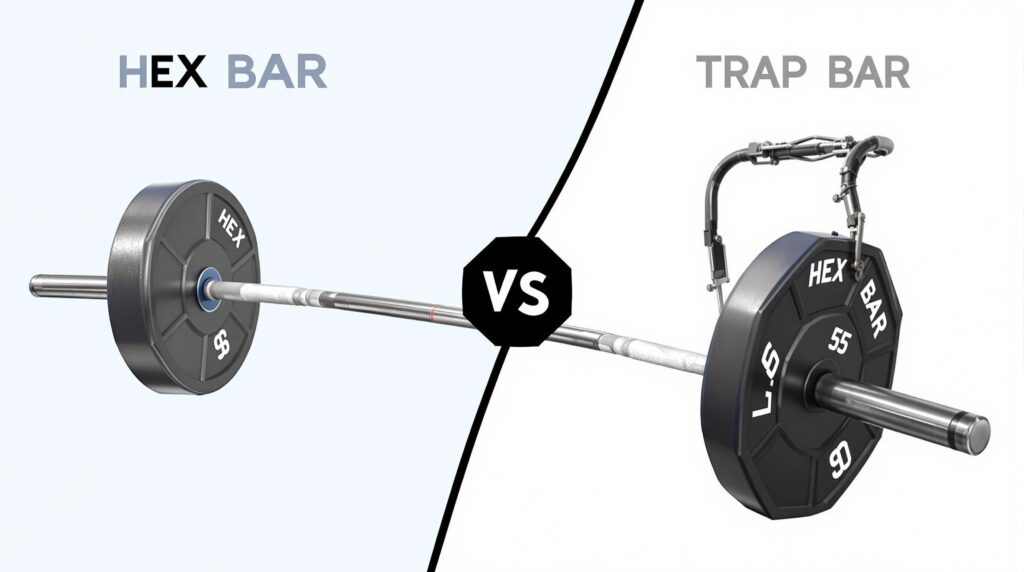
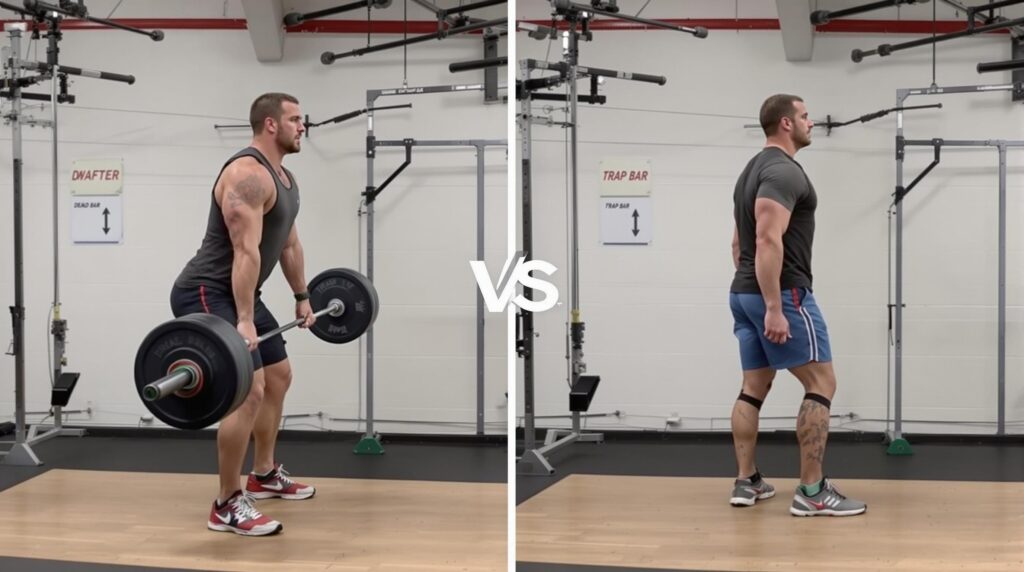
The deadlift and trap bar deadlift are foundational strength exercises that target similar muscle groups but with distinct biomechanical differences. When comparing deadlift vs trap bar variations, understanding their unique benefits for muscle development, strength acquisition, and injury risk can help you select the option that best aligns with your fitness goals and physical capabilities.
Key Takeaways
- The conventional deadlift activates more posterior chain muscles, while the trap bar deadlift places greater emphasis on quad engagement
- Research shows trap bar deadlifts allow lifters to handle approximately 4-5% more weight than conventional deadlifts
- Beginners and those with back issues may benefit from starting with the more spine-friendly trap bar variation
- Both exercises effectively build overall strength, but specific training goals should determine which variation to prioritize
- Incorporating both deadlift styles into your training program can maximize strength development and minimize movement pattern overuse
Biomechanical Differences Between Conventional and Trap Bar Deadlifts
The conventional deadlift and trap bar deadlift differ significantly in their movement mechanics. In a conventional deadlift, the barbell remains in front of your body, creating a longer moment arm around the hips and lower back. This positioning requires greater hip hinge movement and places more demand on the posterior chain muscles.
With the trap bar deadlift, you stand inside the hexagonal bar with the weight distributed more evenly around your center of gravity. This design creates a more upright torso position and shorter moment arm, reducing shear forces on the spine. The trap bar’s elevated handles also decrease the range of motion required, making it more accessible for beginners or those with mobility limitations.
Pro Tip: Equipment Matters
The quality of your equipment dramatically affects your workout results. See our equipment recommendations →
These biomechanical differences result in distinct muscle activation patterns. The conventional deadlift emphasizes hamstrings, glutes, and spinal erectors, while the trap bar variation incorporates more quadriceps engagement due to the increased knee flexion during the movement.
Muscle Activation and Growth Potential
EMG studies have revealed important differences in muscle recruitment between these two deadlift variations. The conventional deadlift produces greater activation in the posterior chain muscles, particularly the erector spinae, hamstrings, and gluteus maximus. This makes it especially valuable for developing hip extension strength and back thickness.
The trap bar deadlift, while still engaging the posterior chain, shows higher quadriceps activation. A study published in the Journal of Strength and Conditioning Research found that trap bar deadlifts produced approximately 20% more quadriceps engagement compared to conventional deadlifts.
For maximum muscle development, consider these specific benefits of each variation:
- Conventional deadlift: Superior for hamstring, glute, and lower back development
- Trap bar deadlift: Better quadriceps development while still training posterior chain
- Conventional deadlift: Greater grip strength demands due to bar position
- Trap bar deadlift: More balanced overall lower body development
If your goal is comprehensive muscle growth, incorporating both variations into your training program may yield the best results. Alternating between conventional and trap bar deadlifts can ensure complete development of all lower body and back muscles.
Strength Development and Performance Transfer
When comparing strength potential between the two variations, research consistently shows that most lifters can handle heavier loads with the trap bar. A comparative study found that trained individuals could lift approximately 4-5% more weight using the trap bar compared to conventional deadlifts.
This weight difference stems from the trap bar’s more favorable leverage and reduced technical demands. The conventional deadlift requires greater technical proficiency, particularly in maintaining proper back position throughout the lift. The trap bar’s design naturally promotes better positioning, allowing for safer loading.
For strength athletes, the transfer of training effects is an important consideration. The conventional deadlift has greater specificity to powerlifting competition, making it essential for powerlifters. However, for athletes in sports requiring general lower body power, the trap bar deadlift may provide better carryover due to its more vertical force production pattern.
Many world-class strength athletes utilize both variations in their training, often using the trap bar for higher volume work and the conventional deadlift for specific strength development.
Injury Risk and Safety Considerations
Safety is a primary concern when choosing between deadlift variations. The conventional deadlift places greater shear forces on the spine due to the more horizontal back angle required. This increases the risk of lower back injuries, particularly for individuals with poor technique or existing back issues.
The trap bar deadlift’s design reduces lumbar stress by allowing a more upright torso position. Biomechanical analysis shows approximately 25% less stress on the lumbar spine during trap bar deadlifts compared to conventional deadlifts, making it a safer option for many lifters.
For beginners and those with back concerns, the trap bar offers several safety advantages:
- Reduced stress on the lumbar spine
- More balanced load distribution
- Less technical skill required for proper execution
- Elevated handles decrease range of motion requirements
However, the conventional deadlift provides valuable training for proper hip hinge mechanics, which can help prevent injuries in everyday activities. Learning proper form under appropriate guidance can make conventional deadlifts safe and beneficial for most lifters.
Practical Applications for Different Training Goals
Your choice between deadlift variations should align with your specific fitness objectives. For strength athletes competing in powerlifting, the conventional deadlift is essential due to its competition specificity. However, many successful powerlifters incorporate trap bar deadlifts as an accessory movement to build overall strength while managing training fatigue.
For bodybuilders focusing on muscle hypertrophy, both variations offer benefits. The conventional deadlift may provide greater stimulus for back thickness and hamstring development, while the trap bar deadlift offers better quad development with less lower back fatigue.
General fitness enthusiasts and athletes from other sports often find the trap bar deadlift more accessible and better suited to their needs. The reduced technical demands make it easier to perform correctly, and the balanced muscle activation supports overall athletic development.
For those new to strength training, I recommend starting with the trap bar deadlift to develop foundational strength before progressing to the more technically demanding conventional deadlift. This approach builds confidence and proper movement patterns while minimizing injury risk.
Programming Recommendations and Exercise Variations
When incorporating deadlifts into your workout program, consider these programming strategies:
- For strength development: Program deadlifts early in your workout when you’re fresh, using 3-5 sets of 3-6 repetitions at 70-85% of your one-rep maximum
- For muscle growth: Moderate weights for 3-4 sets of 6-12 repetitions with controlled tempo
- For beginners: Start with trap bar deadlifts using lighter weights, focusing on technique mastery
- For advanced lifters: Rotate between both variations to prevent overuse and maximize development
Both deadlift styles offer valuable variation options to target specific goals. For the conventional deadlift, you might incorporate sumo stance, deficit deadlifts, or Romanian deadlifts. With the trap bar, you can utilize low handles for greater range of motion, perform jumps for power development, or add pauses at various positions to increase difficulty.
Programming frequency should account for the significant recovery demands of deadlifts. Most lifters benefit from deadlifting 1-2 times per week, with adequate recovery between sessions. The trap bar deadlift generally allows for higher training frequency due to its reduced recovery demands compared to conventional deadlifts.
Conclusion: Making the Right Choice for Your Goals
Both the conventional deadlift and trap bar deadlift offer substantial benefits for strength development and muscle growth. Rather than viewing them as competing exercises, consider them complementary tools in your training arsenal.
For beginners, those with back issues, or lifters prioritizing quad development, the trap bar deadlift offers a more accessible starting point with reduced injury risk. For powerlifters, posterior chain emphasis, or those seeking to maximize hip hinge strength, the conventional deadlift remains the gold standard.
The ideal approach for most lifters is to become proficient in both variations, using them strategically based on training phase, goals, and individual biomechanics. This flexible approach ensures balanced development while managing fatigue and injury risk.
Remember that technique is paramount with both variations. Working with a qualified coach to master proper form will maximize benefits and minimize risks regardless of which deadlift style you choose.