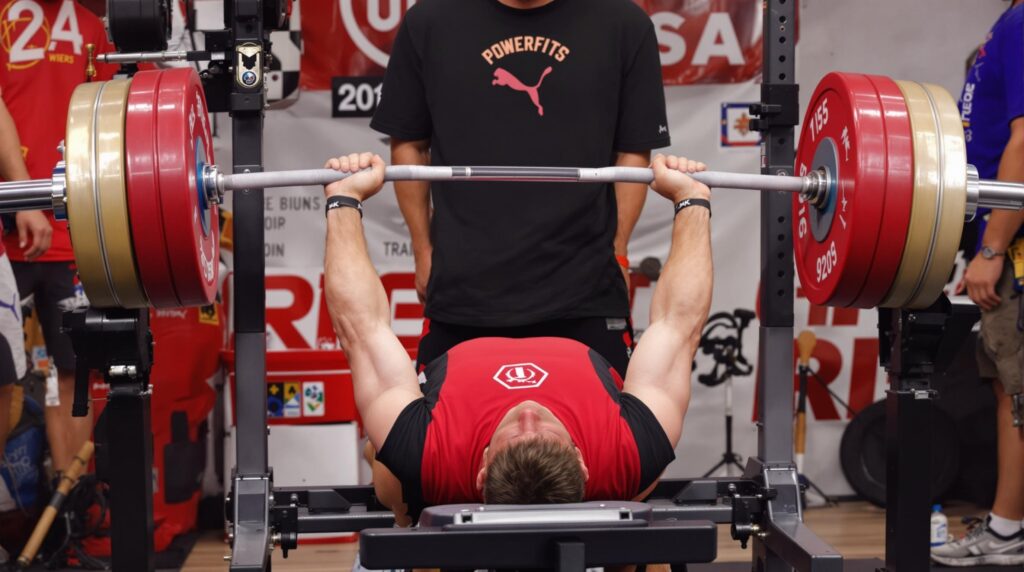
The pursuit of the world record for benching represents the pinnacle of powerlifting achievement, combining years of specialized training, genetic advantages, and meticulous technique refinement. Elite bench pressers like Julius Maddox and Danial Zamani have revolutionized what’s possible in the sport, pushing human strength potential beyond previously imagined limits through innovative approaches to programming, recovery, and mental preparation.
Key Takeaways
- Current bench press world records stand at 782 pounds (355 kg) raw by Julius Maddox and 815 pounds (370 kg) equipped by Danial Zamani, demonstrating the extraordinary strength potential humans can achieve
- Successful record-breaking bench pressers employ periodized training programs that systematically balance volume, intensity, and recovery
- Proper bench press technique including grip width, arch position, and leg drive is crucial for maximal force production and injury prevention
- Accessory exercises like close-grip bench, tricep extensions, and upper back work are essential components in record-breaking training regimens
- Mental preparation strategies such as visualization and controlled aggression play a significant role in elite performance
Evolution of the Bench Press World Record
The bench press has evolved dramatically since its competitive origins in the mid-20th century. What began as a test of strength with records in the 400-pound range has transformed into an extraordinary display of human potential with the current raw world record standing at a staggering 782 pounds (355 kg) held by Julius Maddox. The equipped record pushes even further, with Danial Zamani’s 815-pound (370 kg) lift showcasing the heights of human strength capability.
Pro Tip: Equipment Matters
The quality of your equipment dramatically affects your workout results. See our equipment recommendations →
These records didn’t happen overnight. The progression has accelerated in recent decades due to advances in training methodology, nutrition science, and recovery techniques. The 700-pound barrier, once thought impossible, was first shattered in the early 2000s. Since then, elite lifters have continued to push boundaries through specialized programming and technical refinement that optimizes biomechanical advantages for maximum performance.

Training Methodology of Record Holders
Elite bench pressers don’t rely on random training approaches. They follow highly structured periodization models that systematically vary volume and intensity throughout training cycles. Most world-record holders employ some variation of block periodization, with distinct phases focusing on hypertrophy, strength, and peaking.
A typical training cycle for an elite bencher might span 12-16 weeks, beginning with higher volume work (8-12 reps) to build muscle, transitioning to medium-volume strength work (4-6 reps), and culminating in low-volume, high-intensity sessions (1-3 reps) that prepare the body and nervous system for maximal lift attempts. Frequency varies, but most record holders bench 2-3 times weekly, with each session having distinct focuses such as technique, volume, or intensity.
The specific training split used by many record holders includes:
- Main bench day (highest intensity)
- Variation bench day (close grip, paused, etc.)
- Accessory/hypertrophy day
- Recovery sessions
Technical Mastery: The Foundation of Record-Breaking Lifts
While raw strength matters, technical proficiency makes the difference between good and elite lifters. Record holders have mastered several critical technical elements that maximize leverage and force production:
Grip width selection is highly individualized but typically falls between 1.5-2x shoulder width. This position optimizes the contribution of the pectorals, anterior deltoids, and triceps while minimizing the range of motion. The proper arch creates a more advantageous pressing angle and reduces the distance the bar must travel. Unlike common misconceptions, the elite arch isn’t about extreme flexibility but about optimal positioning of the shoulders and upper back.
Leg drive, often overlooked by casual lifters, is essential for stabilizing the body and transferring force through the kinetic chain. Record holders use their legs to create tension and stability throughout the lift, effectively turning their body into a rigid platform for pressing. Bar path isn’t straight up and down but follows a slight J-curve, starting over the shoulders and ending over the mid-chest at lockout, maximizing mechanical efficiency.
Accessory Work: Building the Supporting Cast
Record-breaking bench press performance isn’t built through bench pressing alone. Elite lifters dedicate significant training time to targeted accessory movements that strengthen specific muscle groups and address weaknesses in the pressing chain.
The most valuable accessory exercises in the arsenal of world record holders include:
- Close-grip bench press: Develops tricep strength crucial for lockout
- Floor press: Eliminates leg drive and reduces range of motion to focus on raw pressing power
- Board press: Allows overloading specific portions of the range of motion
- Dumbbell press variations: Addresses muscle imbalances and improves stability
- Upper back work: Rows, face pulls, and lat pulldowns create the stable platform needed for big benches
I’ve found that world-class bench pressers typically dedicate 30-40% of their total training volume to these accessory movements. This approach ensures balanced development and prevents the weak links that could limit performance or lead to injury under extreme loads.
Nutrition and Recovery Strategies
The nutritional approach of record-holding bench pressers typically involves strategic caloric surpluses to support muscle growth and strength development. Protein intake generally ranges from 1.8-2.2g per kg of bodyweight, significantly higher than recommendations for the general population. Carbohydrate timing is particularly important, with the highest intake occurring around training sessions to fuel performance and recovery.
Recovery techniques employed by elite benchers are equally sophisticated. Most incorporate dedicated deload weeks every 4-6 weeks of intense training, reducing volume by 40-60% while maintaining some intensity to preserve neural adaptations. Sleep optimization is non-negotiable, with most record holders aiming for 8-10 hours nightly plus strategic naps on training days.
Active recovery protocols commonly include:
- Soft tissue work (massage, foam rolling)
- Contrast therapy (alternating hot and cold treatments)
- Low-intensity movement on rest days
- Stress management practices
The combination of proper nutrition and recovery creates an environment where the body can adapt to the extreme demands placed upon it during world-record attempt preparation.
Mental Preparation and Performance Psychology
The psychological component of bench press world records cannot be overstated. Record holders universally employ advanced mental preparation techniques that allow them to perform at their absolute limits when it matters most.
Visualization practices typically begin weeks before an attempt, with lifters mentally rehearsing every aspect of the lift – from approach to completion – in vivid detail. This mental programming creates neural pathways that support the physical execution under pressure. Arousal regulation strategies help lifters find their optimal zone of performance intensity, with some needing heightened aggression while others perform better with controlled calm.
Pre-lift routines are methodically developed and religiously followed. These might include specific breathing patterns, movement sequences, or trigger phrases that signal the body and mind to perform. The consistency of these routines provides a sense of control and predictability in high-pressure situations.
Perhaps most importantly, world record holders cultivate an unwavering belief in their capability. This self-efficacy comes from years of successful training lifts and a deep understanding of their own strength potential.
Equipment Considerations for Maximum Performance
While raw bench press world records are achieved without supportive equipment, specific gear choices still significantly impact performance. The equipment selection process is highly personalized and refined through years of competition experience.
Wrist wraps provide crucial joint stability under extreme loads, with most record holders preferring medium to stiff wraps tightened specifically to their individual comfort and support needs. Bench shirts, used in equipped lifting categories, can add 100+ pounds to a lifter’s raw maximum by storing elastic energy during the eccentric phase. These technical garments require specialized training and technique adjustments to use effectively.
Even belt selection matters. While not as critical as in squats or deadlifts, many elite benchers use a properly positioned belt to increase intra-abdominal pressure and enhance total-body stability. Proper footwear with flat, non-compressible soles ensures maximum force transfer through the leg drive component of the lift.
For those looking to improve their own bench press performance, taking cues from these equipment considerations can yield improvements, even for recreational lifters not chasing world records.
Injury Prevention for Long-Term Progress
The pursuit of bench press world records places enormous stress on the body, making injury prevention not just advisable but essential for continued progress. Elite lifters implement comprehensive prehabilitation routines to maintain joint health and muscle balance.
Shoulder health represents the primary concern, with most record holders performing daily rotator cuff strengthening and mobility work. This typically includes external and internal rotation exercises with bands or light dumbbells. Pec minor and anterior shoulder stretching helps counteract the adaptive shortening that can occur from years of pressing movements.
Strategic deloading serves a dual purpose of performance enhancement and injury prevention. By periodically reducing training stress, tissues can fully recover before facing new intensity demands. Many elite benchers also alternate between high-stress and lower-stress pressing variations throughout their training cycles to avoid repetitive strain patterns.
Proper warm-up protocols are non-negotiable and typically include:
- General cardiovascular elevation (5-10 minutes)
- Dynamic mobility for shoulders, elbows, and thoracic spine
- Progressive loading with perfect technique (5-8 sets)
- Activation exercises for stabilizing muscles
These preventative measures allow record holders to train consistently for years – the true prerequisite for achieving world-class strength levels.
Genetic Factors in Elite Bench Press Performance
While training methodology and technique are critical, genetic factors undeniably influence the potential for record-breaking bench press performance. Research has identified several heritable traits that correlate with exceptional pressing strength.
Anthropometric advantages include shorter arms relative to torso length, which reduces the range of motion and improves leverage during the lift. Bone structure, particularly a broader-than-average clavicle and robust scapular architecture, provides superior attachment points for the muscles involved in pressing movements.
Muscle fiber composition plays a significant role, with higher percentages of fast-